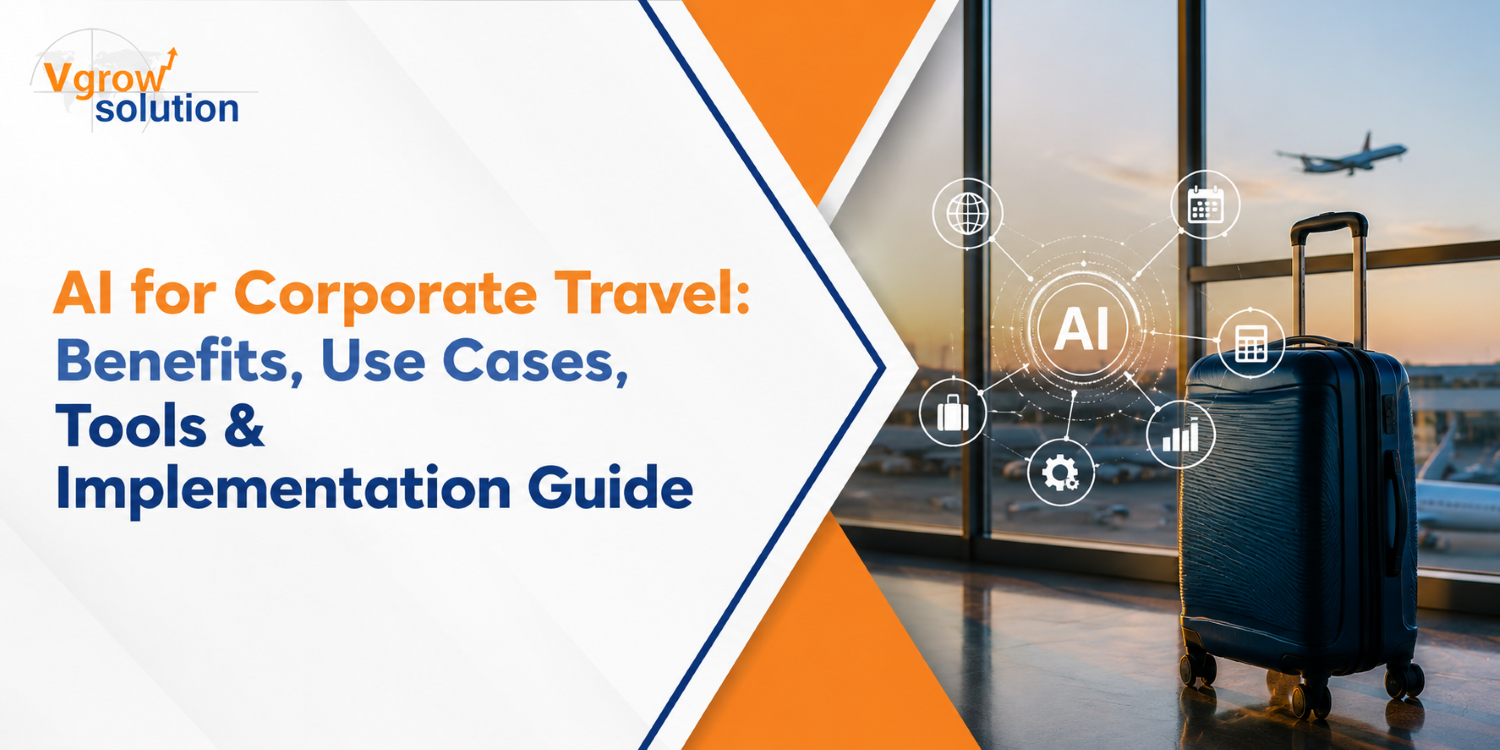
AI for Corporate Travel: Benefits, Use Cases, Tools & Implementation Guide
Last updated on August 13th, 2026
Managing business trips requires balancing employee safety, tight budgets, and strict corporate guidelines. Modern operations increasingly rely on AI for Corporate Travel to eliminate manual coordination and automate complex booking workflows. This specialized software processes flight options and corporate pricing structures much faster than human teams can.
To maximize these technological investments, many businesses rely on a dedicated travel agency assistant to oversee backend logistics. These digital systems monitor changing airline prices and update itineraries in real time to prevent costly travel delays. Incorporating a comprehensive Virtual Travel Assistants network ensures that individual business travelers receive instant, personalized support at any hour of the day.
Table of Contents
What Is AI for Corporate Travel?
How AI Is Transforming Business Travel
Core AI Technologies Used in Corporate Travel
AI Use Cases Across the Corporate Travel Journey
Benefits of AI for Corporate Travel
How to Implement AI in Corporate Travel
What Is AI for Corporate Travel?
Artificial intelligence in the commercial flight industry represents a collection of automated data systems designed to manage business trips. These tools review massive sets of airline pricing history, hotel occupancy metrics, and corporate expense guidelines simultaneously. By deploying AI for Corporate Travel, companies change their logistics from a slow manual task into a fast, automated operational system.
These smart platforms function like an automated travel agency assistant, handling routine modifications without human intervention. The software reads unstructured trip request emails, extracts critical trip dates, and cross-references available itineraries with company travel policies. Utilizing interactive Virtual Travel Assistants guarantees that corporate staff can book compliant travel routes without spending hours searching public commercial flight engines.
Automate corporate travel planning with AI-powered workflows and expert support.
How AI Is Transforming Business Travel
Traditional corporate trip planning involves prolonged manual verification processes and fragmented communications across multiple websites. Deploying AI for Corporate Travel changes this static framework by introducing real-time automation and predictive booking logic. This shift enables operations teams to instantly handle massive travel schedules without multiplying their administrative headcount.
Traditional vs AI-powered travel
Conventional travel booking requires staff members to manually cross-reference corporate credit rules with independent airline websites. In contrast, modern automated software instantly compiles approved options and projects future price shifts based on deep market analytics. A digital travel agency assistant dynamically adjusts hotel selections based on previous employee choices, creating a faster, personalized reservation experience.
Why organizations are investing in AI
Modern corporations invest heavily in automated trip platforms to significantly reduce their annual operating overhead. By integrating smart Virtual Travel Assistants, companies provide 24 hr customer support without hiring large internal teams. These systems continuously audit spending patterns, catch hidden compliance violations early, and uncover immediate saving opportunities.
Core AI Technologies Used in Corporate Travel
The software that drives corporate trip systems relies on several interconnected layers of modern computer science. Combining these specialized components ensures that AI for Corporate Travel platforms can understand natural human instructions and predict global price fluctuations accurately.
- Machine Learning: Algorithms analyze historical enterprise trip data to discover seasonal pricing patterns and hidden cost-saving opportunities.
- Natural Language Processing: Text analysis engines allow an automated travel agency assistant to interpret emailed booking requests and build correct itineraries.
- Generative AI: Smart contextual engines craft personalized travel summaries, clear policy explanations, and proactive safety updates for traveling workers.
- Robotic Process Automation: Software bots execute repetitive administrative tasks like checking passport expirations and filing standard visa applications.
- Predictive Analytics: Data engines project future flight price jumps, allowing Virtual Travel Assistants to recommend the exact best moment to buy tickets.
- Agentic AI: Advanced autonomous systems independently resolve travel disruptions by booking alternate flights when cancellations happen.
AI Use Cases Across the Corporate Travel Journey
Automated systems add massive efficiency to corporate itineraries before, during, and after an employee leaves for a trip. Implementing AI for Corporate Travel ensures that every phase of corporate travel remains cost-effective, secure, and compliant.
Trip planning
Planning corporate travel requires analyzing multi-leg itineraries and checking real-time global scheduling updates simultaneously. An automated travel agency assistant parses open itineraries to suggest optimized flight combinations that fit the company timeline perfectly. This rapid automated preparation reduces the time employees spend organizing complicated global travel arrangements.
Booking optimization
Finding the best corporate flight options involves balancing individual employee preferences with rigid corporate budget boundaries. Utilizing intelligent Virtual Travel Assistants helps firms analyze historical booking options to surface high-value hotel and flight selections instantly. The software continuously refines its recommendations based on direct feedback from past employee choices.
Dynamic pricing
Airline and hotel rates shift continuously based on real-time market demand and available inventory. Utilizing AI for Corporate Travel helps companies monitor these shifting market rates to grab optimized corporate discounts automatically. This automated monitoring helps protect corporate travel budgets from sudden seasonal price increases.
Travel policy compliance
Enforcing compliance rules manually usually requires corporate managers to review individual receipts long after a trip concludes. An automated travel agency assistant checks compliance boundaries during the initial booking window to stop unapproved purchases before they happen. This real-time filtering keeps corporate travel spending aligned with current financial rules.
Expense management
Processing physical corporate receipts after an extended trip remains a frustrating bottleneck for accounting departments. Advanced Virtual Travel Assistants scan expense data continuously to flag unusual transactions and prevent duplicate corporate reimbursements. This ongoing verification ensures that corporate financial databases remain accurate and clean.
Receipt automation
Manual data entry of paper travel receipts introduces frequent human errors and wastes valuable accounting hours. Automated character recognition engines scan uploaded receipt images to extract transaction amounts, tax details, and merchant names instantly. This automated extraction accelerates the internal reimbursement cycle for employees.
Travel disruption management
Sudden flight cancellations and extreme weather patterns can leave traveling corporate workers stranded at distant airports. Systems built around AI for Corporate Travel catch these unexpected scheduling delays early and suggest alternative travel routes instantly. This fast automated response minimizes the total productivity loss caused by sudden flight cancellations.
Duty of care
Companies possess a strict legal obligation to ensure their field workers remain secure during overseas corporate travel. A digital travel agency assistant tracks real-time global event data to pinpoint exactly which workers are near dangerous situations. This continuous tracking helps risk managers coordinate rapid emergency evacuations when safety hazards occur.
Risk monitoring
Global safety landscapes change rapidly due to unexpected geopolitical shifts, labor strikes, and severe weather patterns. Intelligent Virtual Travel Assistants monitor active security channels worldwide to alert corporate travelers to developing transit threats early. This continuous risk tracking allows corporate teams to adjust their travel routes safely before problems escalate.
Traveler support
Providing constant human support for thousands of traveling employees requires an unsustainably large customer service center. Using AI for Corporate Travel allows companies to answer repetitive routine transit questions instantly through automated chat channels. This constant availability guarantees that business travelers get immediate support regardless of their destination time zone.
Reporting and analytics
Analyzing historical corporate travel files manually often obscures major long-term waste and inefficient spending trends. Automated analytics platforms aggregate extensive travel data to compile comprehensive executive reports on total carbon emissions and vendor performance. These clear data readouts empower executives to negotiate much stronger corporate discount agreements with major airlines.
Benefits of AI for Corporate Travel
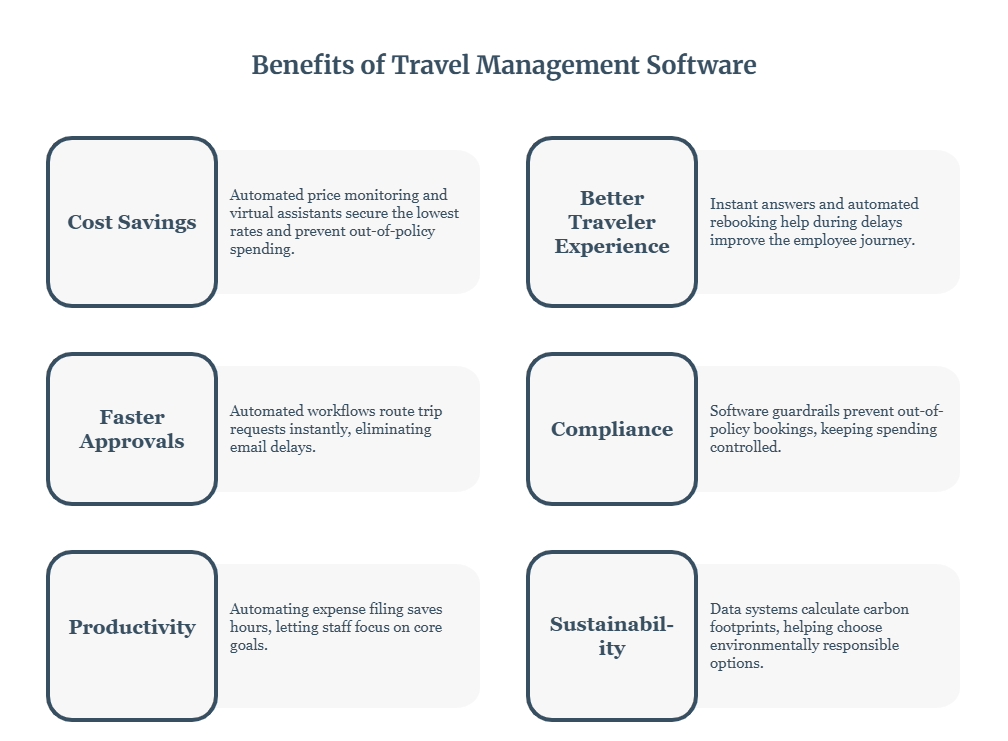
Transitioning to automated corporate travel systems provides immediate operational advantages for both administration teams and traveling employees. Deploying a comprehensive travel agency assistant matrix simplifies corporate expense tracking while reducing the hours spent on manual booking tasks.
- Cost savings: Automated price monitoring tools secure the lowest possible rates on flights and hotels, while smart Virtual Travel Assistants prevent out-of-policy employee spending.
- Better traveler experience: Traveling employees receive instant answers to scheduling questions and fast, automated rebooking help during unexpected airport delays.
- Faster approvals: Automated workflows route trip requests through proper managerial channels instantly, eliminating long email delays for urgent business trips.
- Compliance: Software guardrails prevent out-of-policy bookings during the initial search phase, keeping total company travel spending highly controlled.
- Productivity: Automating mundane expense filing and receipts documentation saves valuable hours, letting field staff focus entirely on core business goals.
- Sustainability: Data systems calculate the carbon footprint of individual transit routes, helping companies choose environmentally responsible travel options.
Challenges and Risks
While modern travel tools provide massive efficiency, implementing automated software introduces specific structural challenges that require careful management. Organizations must proactively address security vulnerabilities and user adoption hurdles to protect their corporate operations.
- Privacy: Storing comprehensive corporate travel histories and individual passenger identification records requires strict compliance with international privacy rules.
- Security: Utilizing unverified Virtual Travel Assistants could expose sensitive corporate travel itineraries to external threat actors if the platform lacks strong encryption.
- Bias: Algorithmic recommendation systems might prioritize specific corporate airlines repeatedly, unintentionally hiding better alternative travel options from employees.
- Integration complexity: Connecting new AI for Corporate Travel software with older legacy ERP systems and accounting platforms can create technical friction.
- User adoption: Employees accustomed to booking via a traditional travel agency assistant may resist moving to new automated travel software interfaces.
- Regulatory compliance: Travel management algorithms must adapt continuously to changing local airline passenger rights laws and corporate taxation updates.
How to Implement AI in Corporate Travel
Successfully introducing automated travel software requires a structured transition plan to ensure full system compatibility. Following a clear implementation sequence helps companies deploy AI for Corporate Travel platforms smoothly without disrupting ongoing business operations.
- Assess current processes: Audit your existing corporate travel workflows to identify exactly where manual entry errors and booking delays occur most frequently.
- Define objectives: Establish clear target metrics for your new travel agency assistant, such as reducing booking times or cutting unapproved travel expenses by a specific percentage.
- Select AI solutions: Evaluate different automated platforms to find travel software that matches your company’s security requirements and scale of operations.
- Integrate systems: Connect the chosen Virtual Travel Assistants software with your active company communication channels, HR databases, and accounting systems.
- Train users: Provide clear documentation and simple tutorials to ensure traveling workers and managers understand how to use the automated travel software.
- Measure outcomes: Review corporate travel data regularly to confirm the automated platform is meeting your cost-saving goals and operational targets.
- Optimize continuously: Refine your travel software parameters based on direct employee feedback to improve overall user adoption and system efficiency.
Future of AI in Corporate Travel
The next generation of corporate travel management will feature much higher levels of automation and deeply personalized user experiences. As AI for Corporate Travel software matures, manual intervention in business booking will become increasingly rare.
- Autonomous travel agents: Software systems will independently manage entire multi-leg international journeys and handle complex flight disruptions without needing human input.
- Voice-first booking: Business travelers will command a digital travel agency assistant using natural spoken phrases to book flights instantly while on the go.
- Hyper-personalization: Smart Virtual Travel Assistants will build entire custom itineraries around an employee’s specific dietary needs, bedding choices, and airline seat preferences.
- Predictive travel planning: Predictive data models will analyze long-term corporate calendars to pre-book essential business trips before flight prices begin to climb.
- AI-driven procurement: Automated engines will evaluate millions of corporate data points to negotiate custom corporate discounts directly with hotel networks.
- Sustainable travel optimization: Advanced routing software will automatically recommend low-emission travel alternatives to help corporations meet strict environmental sustainability targets.
Frequently Asked Questions
1. What is AI in corporate travel?
It refers to the use of automated algorithms, machine learning, and data analytics to streamline business trip logistics. Implementing AI for Corporate Travel eliminates manual booking steps, optimizes travel spending, and ensures compliance with company financial policies.
2. Can AI replace travel managers?
No, the software is built to handle repetitive data tasks rather than replace human leadership entirely. While a digital travel agency assistant automates routine booking modifications, human managers are still essential for high-level vendor negotiations and managing complex emergencies.
3. Is AI secure for business travel?
Premium corporate travel platforms utilize enterprise-grade encryption and strict privacy protocols to shield sensitive passenger data. However, deploying unverified Virtual Travel Assistants without checking security compliance can expose corporate travel itineraries to safety risks.
4. How does AI reduce travel costs?
The software constantly monitors global fare fluctuations to secure corporate travel deals at the lowest market rates. It also flags out-of-policy choices instantly during the booking window, preventing employees from making unapproved, expensive travel purchases.
5. What industries benefit most?
Any sector that maintains large distributed sales teams, technical consulting branches, or global operational offices derives massive value from automation. These tools significantly reduce administrative strain for organizations managing constant, high-volume travel schedules.
6. How much does AI travel software cost?
Pricing structures scale based on the total number of active users, your monthly travel volume, and needed platform integrations. Most software providers offer customizable subscription tiers that allow expanding businesses to pay only for the exact tools they use.
7. How do companies implement AI successfully?
Success requires auditing current travel bottlenecks and setting clear cost reduction goals before purchasing any software. Providing comprehensive user training ensures that employees adopt the new automated booking tools rather than relying on outdated manual processes.

Vgrow