
Home / Blog / Hire a Virtual Assistant Real Estate Scaling Portfolios via 7 ROI-Proven REVA Frameworks
Hire a Virtual Assistant Real Estate Scaling Portfolios via 7 ROI-Proven REVA Frameworks

Last updated on March 12th, 2026
Real estate professionals are facing increasing pressure to do more with less. According to the U.S. Bureau of Labor Statistics, productivity in business work increased by 2.7 percent in 2023, driven largely by remote work tools and outsourcing ability to scale operations efficiently.
This statistic highlights that productivity improves when business owners adopt support systems that allow delegation. One of the most impactful strategies for real estate owners is to hire a virtual assistant real estate specialist who can manage repetitive tasks and let you focus on revenue-generating activities.
This article shows how virtual assistants for real estate solutions can help scale your portfolio, increase lead conversion, and maximize ROI.
Table of Contents
What is a Virtual Assistant Real Estate Professional?
Why Real Estate Professionals Are Turning to REVA Frameworks
7 ROI-Proven Real Estate Virtual Assistant Services
How to Choose the Right Real Estate Virtual Assistant Agency
Subtle Advantages of Hiring Real Estate Virtual Assistants

What is a Virtual Assistant Real Estate Professional?
A virtual assistant real estate professional is a remote expert trained to support tasks specific to property businesses. Their duties include lead follow up, transaction coordination, buyer and seller support, appointment scheduling, and CRM updates.
They are strategic partners, not temporary help. Real estate virtual assistants handle recurring tasks so agents and owners can focus on growing the business and closing deals.
Why Real Estate Professionals Are Turning to REVA Frameworks
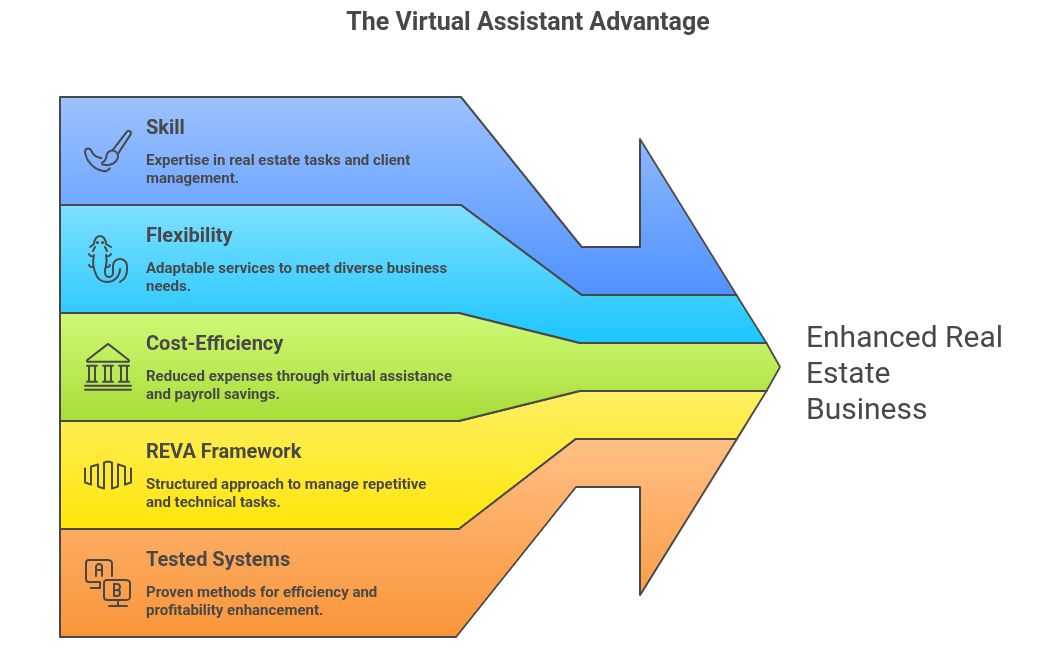
Real estate virtual assistant services are growing rapidly because they combine skill, flexibility, and cost-efficiency. Real estate virtual assistant companies have developed proven frameworks to deliver measurable return on investment.
The REVA Framework helps manage repetitive, technical, or operational tasks so that business owners work at the top of their field. By choosing a real estate virtual assistant agency, you access tested systems that enhance efficiency and profitability.
Business owners prefer real estate virtual assistant services because they:
- Reduce costly operational errors
- Improve lead response time and client satisfaction
- Allow teams to focus on strategic growth
- Save money on full-time payroll and office overhead
7 ROI-Proven Real Estate Virtual Assistant Services
Here are seven ways real estate virtual assistants create ROI for your business:
1. Relentless Lead Nurturing
Most agents stop following up after the second attempt, yet 80% of sales happen between the fifth and twelfth contact. A REVA ensures no lead goes cold.
- The ROI: They transform “maybe later” inquiries into “ready now” appointments by maintaining a consistent, professional presence in the prospect’s inbox.
2. CRM Optimization (Your Digital Goldmine)
A CRM full of “Dead Leads” and outdated phone numbers is a liability, not an asset. A REVA scrubs your data, tags hot prospects, and sets automated triggers.
- The ROI: You stop wasting hours scrolling through messy lists and start every morning with a curated “Hit List” of the most closable deals.
3. High-Precision Calendar Command
Between showings, inspections, and closings, your schedule is a minefield of double-bookings. A REVA acts as your air traffic control, managing time zones and sending automated SMS reminders to clients.
- The ROI: Drastically reduced no-show rates and a schedule that actually allows for a lunch break.
4. Seamless Transaction Coordination
The “Contract-to-Close” period is where the most stress—and legal risk—lives. A REVA tracks contingency deadlines, gathers HOA docs, and ensures every signature is in place.
- The ROI: By offloading the 15+ hours of paperwork per file, you can focus on putting the next property under contract.
5. Elite Buyer & Seller Concierge
Top-tier agents win on “The Experience.” A REVA provides white-glove support by sending weekly status updates to sellers and answering “What’s the next step?” questions from nervous buyers.
- The ROI: Higher client satisfaction leads to a surge in referrals—the most cost-effective lead source in existence.
6. Omnipresent Brand Marketing
If you only post on social media when you’re “not busy,” your brand looks inconsistent. A REVA manages “Just Listed/Just Sold” graphics, email newsletters, and property descriptions.
- The ROI: Constant market visibility that positions you as the local authority, even when you’re deep in negotiations.
7. Data-Driven Growth Analytics
Most agents “gut-feel” their way through the year. A REVA compiles weekly reports on your Cost Per Lead (CPL), conversion rates, and marketing spend.
- The ROI: You gain the clarity to cut failing ad spend and double down on the channels that are actually putting commissions in your pocket.
The Reality Check
If you don’t have an assistant, you ARE the assistant. Every hour you spend formatting a flyer or updating a spreadsheet is an hour you aren’t at a kitchen table signing a listing agreement.
How to Choose the Right Real Estate Virtual Assistant Services
Hiring the right virtual assistant can significantly improve productivity, lead management, and client experience in your real estate business. However, not every assistant or service provider will align with your operational needs. To ensure long-term value, business owners should carefully evaluate several key factors before selecting a provider.
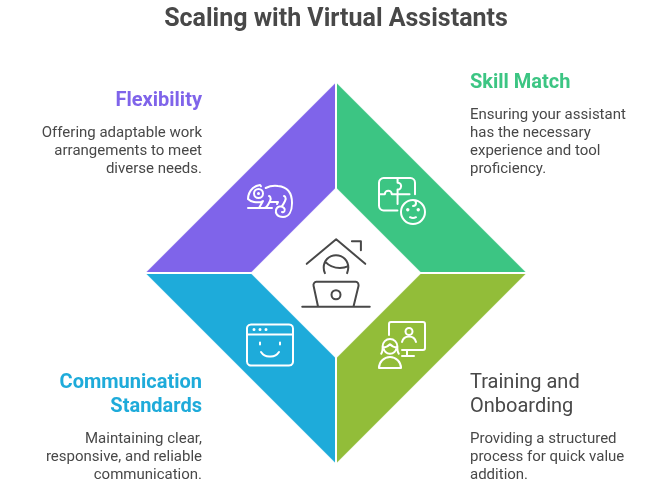
Skill Match
The most important factor when selecting real estate virtual assistant services is ensuring the assistant’s skills match your daily operational needs. Real estate workflows often involve specialized platforms such as CRM systems, MLS databases, property listing platforms, and transaction management software.
An assistant who already understands these tools can integrate quickly into your processes. This reduces training time and prevents costly mistakes that may occur when someone is unfamiliar with real estate systems.
Business owners should also look for evidence of past results. For example, an assistant who has previously managed lead qualification, listing uploads, appointment scheduling, or transaction coordination can begin contributing almost immediately. Reviewing case studies, client testimonials, or sample work can provide valuable insight into their experience level.
A strong skill match ensures your assistant supports revenue-generating tasks rather than spending excessive time learning basic systems.
Training and Onboarding
Even experienced assistants need a clear understanding of how your specific business operates. That is why a structured training and onboarding process is critical when hiring a virtual assistant for real estate operations.
Effective onboarding should include documentation of workflows, CRM procedures, communication guidelines, and lead management processes. When a service provider has a standardized onboarding system, the assistant can quickly adapt to your company’s expectations.
This structure benefits both sides:
- The assistant gains clarity about tasks and priorities,
- The business owner avoids confusion, missed responsibilities, and inconsistent work quality.
Additionally, a strong onboarding framework allows the assistant to begin producing results faster. Instead of spending weeks adjusting to the role, they can start managing listings, responding to inquiries, and organizing client information within days.
Communication Standards
Real estate is a fast-paced industry where timing can determine whether a deal closes or a lead is lost. Because of this, clear and reliable communication is essential when working with a remote assistant.
Your assistant should respond quickly to messages, maintain organized records of client interactions, and provide updates on task progress. Communication channels may include email, CRM notes, task management platforms, or real-time messaging tools.
Strong communication standards ensure that everyone on the team remains aligned. When assistants provide consistent updates and clarify instructions when needed, projects move forward smoothly and errors are minimized.
This is particularly important for tasks like appointment coordination, client follow-ups, and listing updates. Any delay or misunderstanding in these areas can affect client satisfaction and ultimately impact sales opportunities.
Flexibility
Every real estate business experiences fluctuations in workload. Market conditions, listing cycles, and seasonal demand can cause significant shifts in administrative needs.
For this reason, choosing a real estate virtual assistant company that offers flexible service arrangements is highly beneficial. Some agencies provide both part-time and full-time assistant options, allowing businesses to scale support up or down as required.
Flexibility also allows you to test the partnership before committing to a larger engagement. A part-time assistant can initially support tasks such as lead management, database updates, and marketing coordination. As the business grows, the assistant’s responsibilities can expand to include transaction coordination or customer service.
This scalable model helps control costs while ensuring your operations remain efficient during both slow and high-demand periods.
By carefully evaluating skills, onboarding processes, communication standards, and service flexibility, real estate professionals can select virtual assistant services that truly support their growth strategy. The right assistant becomes more than just administrative help. They become a reliable operational partner that allows agents and brokers to focus on closing deals and building stronger client relationships.
Subtle Advantages of Hiring Real Estate Virtual Assistants
Working with a real estate virtual assistant agency offers hidden benefits:
Scalable Staffing
Add team members as your business grows without hiring multiple contractors.
Training and Support
Agencies invest in ongoing education for real estate virtual assistants, ensuring up-to-date expertise.
Quality Control
Agencies monitor performance to maintain consistency and reliability in service.
Partnering with a real estate virtual assistant agency allows you to scale smoothly while focusing on high-value work.
Frequently Asked Questions
1. What tasks can a virtual assistant real estate professional handle?
Lead follow ups, CRM updates, appointment scheduling, transaction coordination, marketing support, and reporting.
2. Can I hire a virtual assistant for real estate part time?
Yes, many providers offer flexible arrangements based on workload.
3. How does a real estate virtual assistant improve productivity?
They take over routine tasks, letting you focus on revenue-generating activities.
4. Are real estate virtual assistant services expensive?
Often less than full-time onsite staff because you pay only for needed expertise and time.
5. How quickly can a real estate virtual assistant company start delivering results?
With proper onboarding, assistants can contribute within days of starting.

Vgrow