
How to Choose the Right Virtual Assistant: 8 Key Metrics to Look For

Last updated on August 31st, 2026
Choosing the right virtual assistant can significantly improve how efficiently your business operates, especially when it comes to customer communication and administrative workload. Many businesses rely on a virtual assistant call answering service to ensure that no customer inquiry goes unanswered, even outside business hours.
A strong virtual assistant phone answering service is no longer just a convenience. It is a core part of customer experience, lead handling, and business scalability.

Table of Contents
Before You Start: Defining Your Business Needs
8 Key Metrics to Evaluate a Virtual Assistant
Red Flags When Hiring a Virtual Assistant
Before You Start: Defining Your Business Needs
Before hiring a virtual assistant for phone answering, it is important to clearly define your business needs and expectations. Many businesses rush into outsourcing without identifying the specific tasks they want to delegate, which can lead to unclear responsibilities, inefficient workflows, and communication gaps.
Start by answering these key questions:
- What tasks will your virtual assistant phone answering handle daily?
Determine whether they will manage general inquiries, appointment scheduling, lead qualification, customer support, call routing, or follow-up calls. - Do you need full-time coverage or just overflow support?
Consider your call volume, business hours, and peak periods to decide whether you need dedicated assistance or additional support during busy times. - Will they handle inbound sales calls or only customer inquiries?
Clarify the level of responsibility required, especially if the assistant will interact with potential customers, qualify leads, or support revenue-generating activities. - What level of training is required?
Identify the knowledge, tools, scripts, and processes the assistant needs to understand to represent your business professionally.
A well-defined scope ensures that your virtual assistant answering calls aligns with your expectations, follows the right processes, and provides a consistent customer experience from the start.
8 Key Metrics to Evaluate a Virtual Assistant
Choosing the right virtual assistant requires more than reviewing a resume or checking availability. Businesses should evaluate key performance factors that determine whether a VA can effectively support daily operations, maintain customer satisfaction, and contribute to long-term growth. These metrics help identify whether a virtual assistant has the right skills, reliability, and experience to become a valuable extension of your team.
1. Relevant Industry Experience
A virtual assistant with experience in your specific industry can adapt faster and require less training compared to someone with no background knowledge. Industry familiarity helps them understand common workflows, customer expectations, terminology, and the types of tasks involved. For example, a VA supporting a virtual assistant phone answering service should understand how to handle customer interactions professionally and follow industry-specific communication standards.
Build an efficient remote team and scale with the perfect virtual assistant agency.
2. Technical Skills and Tool Proficiency
A strong virtual assistant should be comfortable using the digital tools required for your business operations. This may include CRM systems, customer support platforms, VOIP phone systems, scheduling software, communication tools, and reporting platforms. Technical proficiency reduces onboarding time and ensures smoother workflows, especially for businesses relying on virtual assistants answering calls and managing customer interactions remotely.
3. Communication Skills
Communication is one of the most important qualities in a virtual assistant, particularly for roles involving direct customer contact. A VA should be able to communicate clearly, professionally, and consistently across phone calls, emails, chats, and internal updates. Strong communication skills help create positive customer experiences, prevent misunderstandings, and ensure that important information is properly documented and shared.
4. Availability and Time Zone Compatibility
A virtual assistant’s availability should match your business requirements and customer service expectations. If your business receives calls outside traditional working hours, time zone alignment becomes especially important. A mismatch in schedules can result in delayed responses, missed opportunities, and reduced effectiveness in virtual assistant call answering services.
5. Reliability and Responsiveness
Reliability determines whether a virtual assistant can consistently complete tasks and provide dependable support. A responsive VA should acknowledge requests quickly, manage priorities effectively, and follow through on responsibilities without constant reminders. For customer-facing roles, fast response times are essential to prevent missed leads, improve customer satisfaction, and maintain a professional brand image.
6. Problem-Solving Ability
A high-quality virtual assistant should be able to handle unexpected situations and make informed decisions within their level of responsibility. Strong problem-solving skills allow them to manage customer concerns, troubleshoot basic issues, and adapt to changing priorities without requiring continuous supervision. This ability helps businesses maintain productivity even when challenges arise.
7. Data Security and Confidentiality Practices
Virtual assistants often have access to sensitive business and customer information, making security practices a critical evaluation factor. They should understand confidentiality requirements, follow proper data handling procedures, and use secure systems when managing customer details, call records, documents, or company information. A trustworthy VA helps protect both business operations and customer privacy.
8. Scalability and Long-Term Support Potential
The best virtual assistants should be able to grow alongside your business. As your needs increase, they may take on additional responsibilities, support higher call volumes, or assist with new processes. Choosing a virtual assistant call answering service with scalability in mind ensures that your support system can adapt as your business expands.
Evaluating these key metrics helps businesses select a virtual assistant who can deliver consistent performance, improve efficiency, and provide reliable support that aligns with long-term goals.
Red Flags to Watch Out For When Evaluating Virtual Assistants
While hiring a virtual assistant can improve efficiency and customer support, choosing the wrong candidate can create operational issues and negatively affect client experiences. Before committing to a virtual assistant, businesses should carefully evaluate their experience, communication practices, technical skills, and ability to follow structured processes. Watch for these warning signs during the evaluation process:
- Avoid providing references or experience
A reliable virtual assistant should be able to share relevant work history, previous roles, or examples of successful projects. A lack of references or hesitation to discuss past experience may indicate limited experience or difficulty verifying their capabilities. - Lack of structured communication methods
Effective remote work depends on clear communication systems and regular updates. If a candidate does not have a preferred communication process, reporting structure, or method for tracking tasks, it can lead to missed deadlines, confusion, and inconsistent results. - Cannot explain their process for handling calls
For roles involving customer interactions, the VA should understand how to manage incoming calls, qualify inquiries, document information, and escalate issues when needed. A candidate who cannot explain their call-handling approach may struggle to provide consistent support. - Have inconsistent availability
Reliable availability is essential, especially for businesses that depend on quick responses and customer engagement. Unclear schedules, frequent availability changes, or limited commitment can result in missed calls, delayed follow-ups, and lost opportunities. - Do not understand CRM or call handling systems
Virtual assistants supporting customer communication should be comfortable using essential business tools such as CRM platforms, VOIP systems, scheduling software, and customer management tools. A lack of familiarity with these systems may require additional training and slow down operations. - Focus only on completing tasks instead of improving processes
A strong virtual assistant should do more than simply follow instructions. They should be able to identify improvements, suggest better workflows, and help create a more efficient customer support process over time.
If your virtual assistant call answering service lacks structure, proper training, and reliable processes, the customer experience can suffer quickly. Choosing a VA who demonstrates professionalism, accountability, and strong communication habits helps ensure better service quality and long-term business success.
Freelance Virtual Assistant vs Virtual Assistant Agency
When choosing a virtual assistant, businesses typically decide between hiring an independent freelancer or partnering with a virtual assistant agency. Both options have advantages, but the right choice depends on your business size, workload, budget, and the level of reliability you require.
Freelance virtual assistants often provide flexibility and lower costs because businesses work directly with one individual without agency fees. They can be a good option for startups, small businesses, or companies with limited tasks that need occasional support. However, freelancers may have limited availability, fewer backup options, and may not always have access to structured training, quality control processes, or additional support when workload increases.
However, agencies may involve higher costs compared to hiring a freelancer, making them better suited for businesses that prioritize reliability, scalability, and long-term support. Freelancers can still be ideal for businesses that need specialized assistance, have simpler requirements, or are testing outsourcing for the first time.
Choosing between a freelancer and an agency ultimately depends on your workload, reliability expectations, customer service requirements, and future growth plans. Businesses that rely heavily on customer calls, lead management, or continuous communication often benefit from the structure and stability that an agency provides.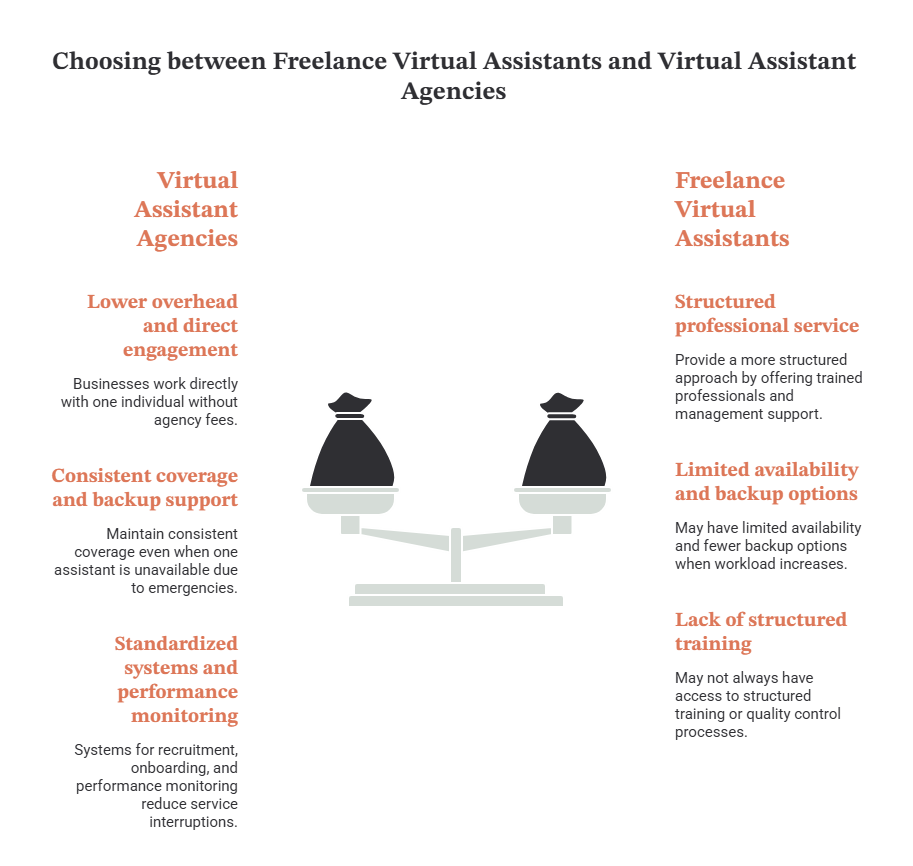
Virtual Assistant Selection Checklist
Before hiring a virtual assistant, it is important to establish clear expectations and prepare the necessary systems to ensure a successful working relationship. A structured hiring process helps prevent communication issues, improves productivity, and ensures the assistant can deliver consistent support from the beginning.
Before hiring, confirm:
- Clear job description for a virtual assistant answering calls
Define the exact responsibilities, including call handling duties, customer support expectations, lead qualification tasks, appointment scheduling, and follow-up responsibilities. A detailed job description helps attract candidates with the right skills and experience. - Defined service hours
Establish the required working schedule, coverage hours, response expectations, and availability requirements. This is especially important for businesses that need continuous customer support or operate across different time zones. - Training process outlined
Create a structured onboarding process that includes company information, call scripts, customer service guidelines, software training, and escalation procedures. Proper training ensures the virtual assistant represents your brand accurately. - Communication protocols established
Set clear guidelines for communication channels, reporting frequency, task updates, and urgent issue handling. Effective communication keeps remote teams aligned and prevents delays or misunderstandings. - Tools and software access are prepared
Ensure the virtual assistant has access to the necessary platforms, such as CRM systems, VOIP tools, scheduling software, customer databases, and internal communication tools. Having systems ready allows them to begin working efficiently. - Performance metrics identified
Define how success will be measured, such as response time, call handling quality, customer satisfaction, lead conversion rates, task completion, and overall productivity. Clear metrics help track performance and identify areas for improvement.
A structured checklist ensures your virtual assistant phone answering service has the right foundation for success. By preparing expectations, processes, and performance standards in advance, businesses can create a smoother onboarding experience and achieve more consistent results over time.
Conclusion
Selecting the right virtual assistant is not just about cost savings. It is about building a reliable communication system that supports business growth. Whether you choose a freelancer or an agency, a structured virtual assistant call answering service ensures that every customer interaction is handled professionally.
A well-trained virtual assistant phone answering service improves efficiency, enhances customer experience, and supports scalability. When properly selected, a virtual assistant answering calls system becomes a long-term asset rather than just an operational expense.
FAQs
1. How quickly can a virtual assistant start handling business calls?
Most virtual assistants can begin handling calls within a few days after onboarding. However, complex industries may require one to two weeks of training to ensure proper understanding of scripts, customer expectations, and escalation procedures.
2. What tools do virtual assistants commonly use for call management?
Virtual assistants typically use VOIP systems, CRM platforms, call tracking software, and scheduling tools. These systems help them manage inbound calls efficiently and ensure all customer interactions are logged, tracked, and followed up properly.
3. Can a virtual assistant improve customer satisfaction?
Yes, a trained virtual assistant improves response time, reduces missed calls, and ensures consistent communication. This leads to better customer satisfaction, as clients receive timely responses and professional interaction every time they contact your business.
4. Is it safe to outsource customer calls to a virtual assistant?
Yes, provided proper security protocols are in place. Businesses should ensure data protection agreements, secure software access, and confidentiality training are implemented before allowing a virtual assistant to handle sensitive customer information.

Vgrow